


Compact, Oil-Free Compressed Air Systems for Laboratory Excellence
Contemporary laboratories rely on sophisticated instrumentation for pharmaceutical testing, chemical analysis, medical diagnostics, and research validation. Many of these critical processes depend on compressed air that is completely free of oil. Even microscopic oil particles can degrade instrument performance, clog fluidic pathways, compromise sample integrity, or invalidate analytical data. Oil-free compression technology is therefore essential for maintaining instrument longevity and result accuracy. LEISEIN delivers oil-free compression solutions engineered specifically to protect sensitive workflows—from chromatography and mass spectrometry to cell culture and quality assurance.
Engineered for Real-World Laboratory Integration
Many laboratory spaces lack dedicated mechanical rooms, requiring compression equipment to operate safely and unobtrusively near personnel and sensitive instruments. LEISEIN units address this through integrated sound attenuation and vibration isolation, allowing installation directly beneath workbenches or alongside analytical equipment. Portable configurations with ergonomic mobility features support dynamic lab environments where equipment may need to be relocated between stations.
For applications requiring dew point control, integrated membrane or adsorption drying technology is available within the acoustic enclosure. Additional purification stages—including activated carbon adsorption and sub-micron particulate filtration—can be specified to achieve air quality aligned with the most stringent analytical protocols.
LEISEIN compressors are designed to comply with ISO 8573-1 air purity classifications, providing confidence for applications where air quality directly impacts experimental validity and regulatory compliance.
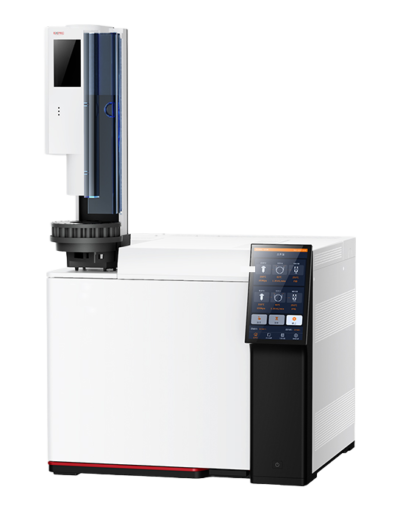
Compressed air for Gas Chromatographs
Gas chromatography (GC) is used to separate complex mixtures into individual chemical compounds. During the process, a carrier gas—typically nitrogen generated from compressed air—transports the sample through a separation column. As molecules interact with the column’s stationary phase, they separate based on their chemical properties and reach the detector at distinct intervals. Because the carrier gas originates from compressed air, the purity and stability of that air supply are critical to ensuring accurate separation and reliable data.
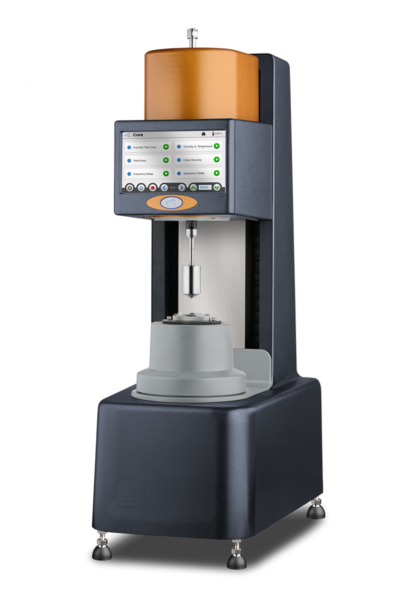
Compressed air for Rheometers
Rheometers measure the deformation and flow behavior of matter, analyzing properties such as viscoelasticity, thixotropy, and melt fracture. These instruments rely on precision air bearings within the drive motor, which require a constant supply of clean, dry air to prevent friction and ensure measurement stability. Contaminants or moisture can compromise bearing performance, leading to data drift or mechanical wear.
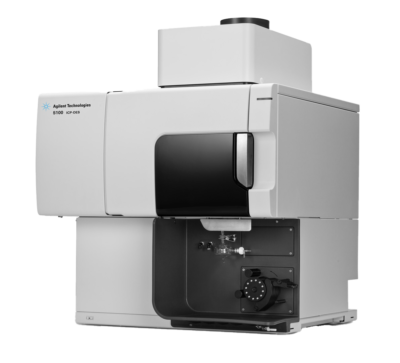
Compressed air for Spectroscopes or Particle Measuring Instruments
Oil-free compressed air is essential in spectroscopic analysis, where light is decomposed into spectra for detailed examination. Depending on the method, compressed air serves as a critical combustion or oxidation gas. Applications range from Atomic Absorption Spectrometers (AAS) used for element determination to Terahertz spectrometers that evaluate material properties via electromagnetic fields, to ICP-OES that detect and quantify trace-level elements in liquid or solid samples, to NMR, FT-IR, etc.
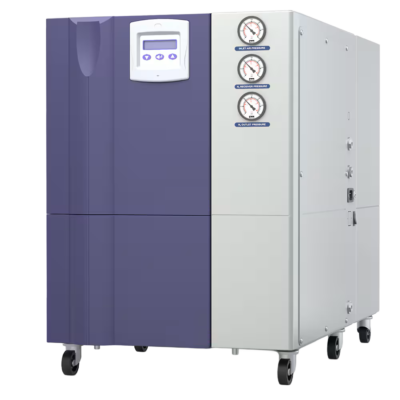
Compressed air for Gas Generators, e.g. nitrogen or zero air generators
On-site gas generators provide a continuous, cost-effective supply of essential gases for laboratory instruments. However, these systems rely heavily on the quality of their input air. To function correctly, gas generators require compressed air that is not only oil-free but also exceptionally dry. Within the system, the filtered and dried compressed air passes through molecular sieves or catalytic filters. Depending on the configuration, specific gases like nitrogen or oxygen are separated for use, or contaminants such as hydrocarbons are removed to produce Zero Air.
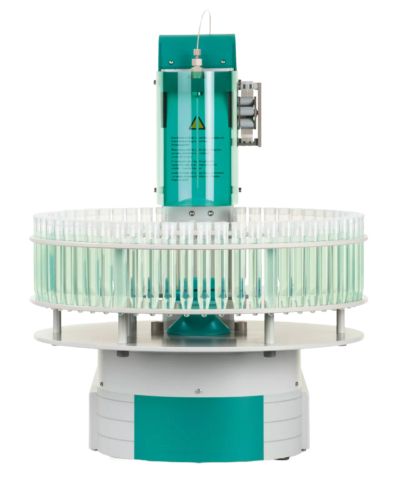
Compressed air for Autosampler, Dispensing
Autosamplers are responsible for the precise injection of samples into HPLC and GC systems. These instruments rely on compressed air for pneumatic actuation of needles, valves, and robotic arms. Any inconsistency in air pressure can lead to injection volume errors, while oil contamination risks clogging micro-fluidic pathways or compromising sample integrity.
Precision dispensing systems rely on compressed air to drive pumps, actuate valves, and control the flow of liquids or powders. Consistent air pressure is vital for accurate dosing. Oil contamination in the air supply can compromise product purity, while pressure fluctuations can lead to costly waste and batch inconsistencies.
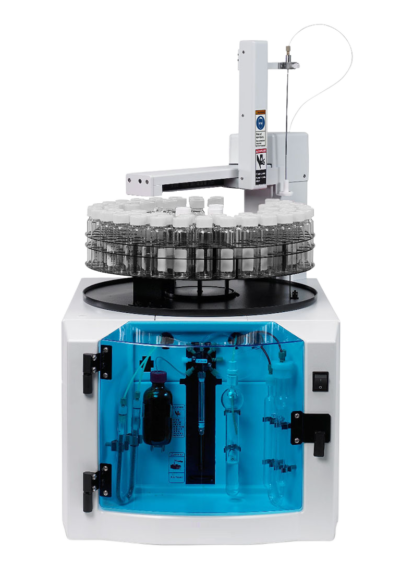
Compressed air for TOC, THA, DSC, TGA, TOD, CO2 analysis
Sensitive analytical techniques—including Total Organic Carbon (TOC), Total Hydrocarbon Analysis (THA), Differential Scanning Calorimetry (DSC), Thermogravimetric Analysis (TGA), Total Oxygen Demand (TOD), and CO₂ detection—rely on compressed air for combustion, purge gas, carrier flow, or pneumatic actuation. In every case, air quality directly impacts data validity: hydrocarbon contamination can cause false positives in combustion-based methods, while moisture or particulates can induce baseline drift, sensor fouling, or mass artifacts in thermal and optical systems.
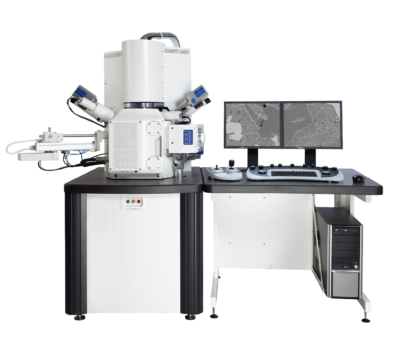
Compressed air for Microscopy
Advanced microscopy techniques—from confocal and fluorescence to scanning electron (SEM) and atomic force (AFM) systems—rely on compressed air for critical functions: air-bearing stages for frictionless positioning, pneumatic focus controls, optical purge systems to prevent lens fogging, and vibration isolation platforms. In every case, air quality directly impacts image fidelity. Oil aerosols can coat lenses and detectors, particulates can scratch delicate optics or contaminate samples, and pressure fluctuations can induce stage drift or focus instability. Even acoustic noise from compression equipment can interfere with high-magnification imaging by introducing vibrational artifacts.
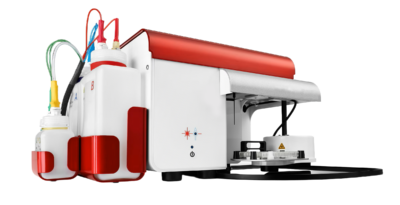
Compressed air for Flow Cytometry
Flow cytometers rely on compressed air for critical pneumatic functions: regulating sheath fluid pressure, controlling sample injection, actuating sorting valves, and generating consistent droplet streams in cell sorters. In these high-precision workflows, air quality directly impacts performance. Oil aerosols can clog microfluidic nozzles or contaminate samples, pressure fluctuations can disrupt droplet formation and sorting accuracy, and moisture can promote microbial growth or interfere with optical detection. Even minor inconsistencies can compromise single-cell resolution and invalidate population data.
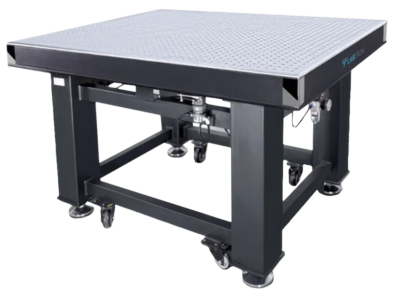
Compressed air for Vibration Free Tables
Vibration-free tables—used in microscopy, interferometry, laser alignment, and precision metrology—rely on compressed air to power pneumatic isolation legs, active damping systems, and automatic leveling mechanisms. In these ultra-sensitive environments, air quality and pressure stability are non-negotiable. Oil contamination can degrade air springs and seals, pressure fluctuations can cause platform drift or resonance, and moisture can lead to corrosion or freezing in critical components. Even acoustic noise from the compression source can introduce vibrational artifacts that compromise sub-micron measurements.
Discover the LEISEIN Partnership Advantage
Precision Engineered & Adaptable
- Consistently delivers certified oil-free air to protect sensitive instrumentation.
- Modular sizing allows seamless integration into diverse laboratory configurations and workflows.
Cost-Efficient & Simplified Upkeep
- Oil-free architecture eliminates routine oil changes; maintenance focuses on accessible filter replacements.
- Energy-optimized components and robust construction reduce lifetime operating expenses.
Quiet Operation & Ergonomic Design
- Advanced acoustic engineering ensures minimal operational noise for focused work environments.
- Compact, mobile designs enable flexible placement at point-of-use.